
TACTICAL BRIEFING: IDENTIFYING HAIL DAMAGE
After a hailstorm, the damage to your stronghold isn't always obvious from the ground. This field guide provides visual intel on what to look for on various common residential and commercial roofing materials. Knowing how to spot the threat is the first step in mounting a proper defense.
Threat Assessment: Concrete Tile Roofs
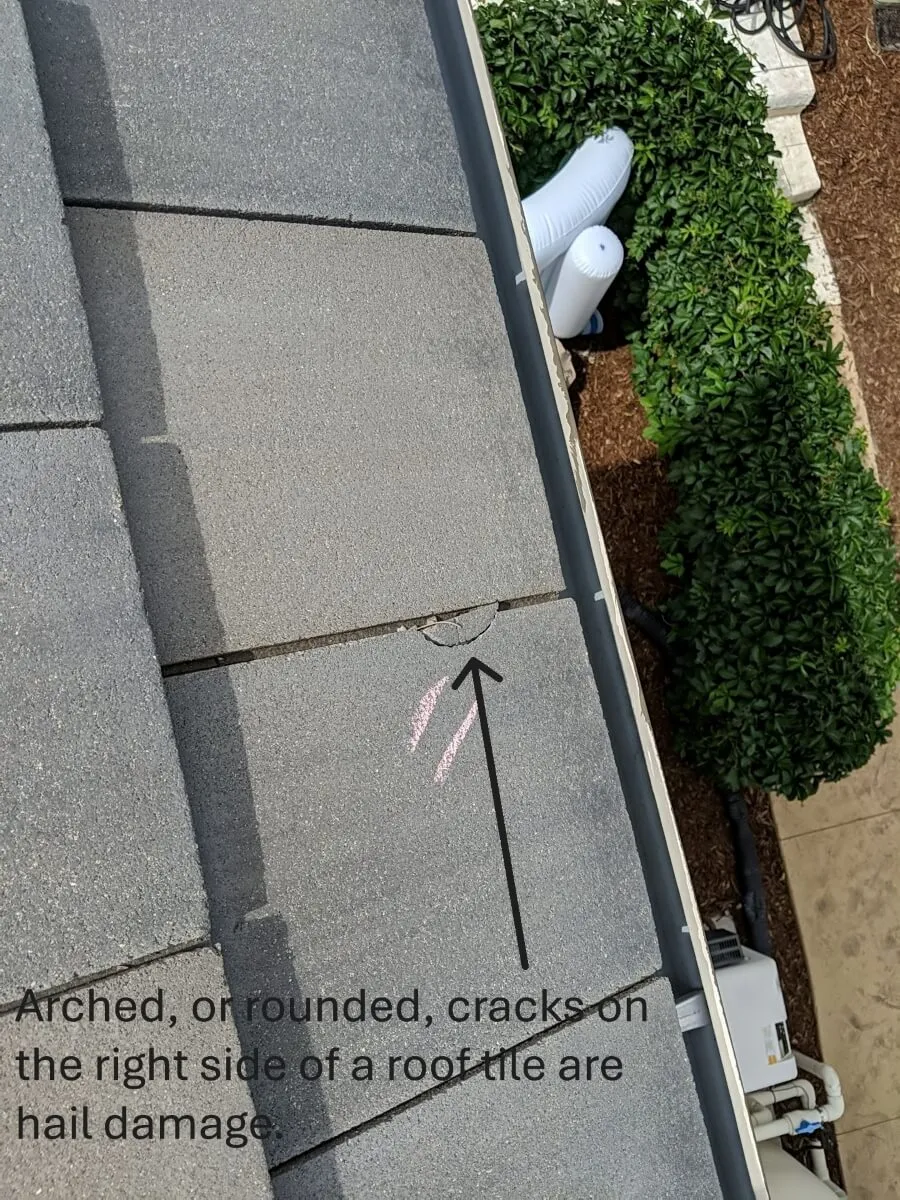
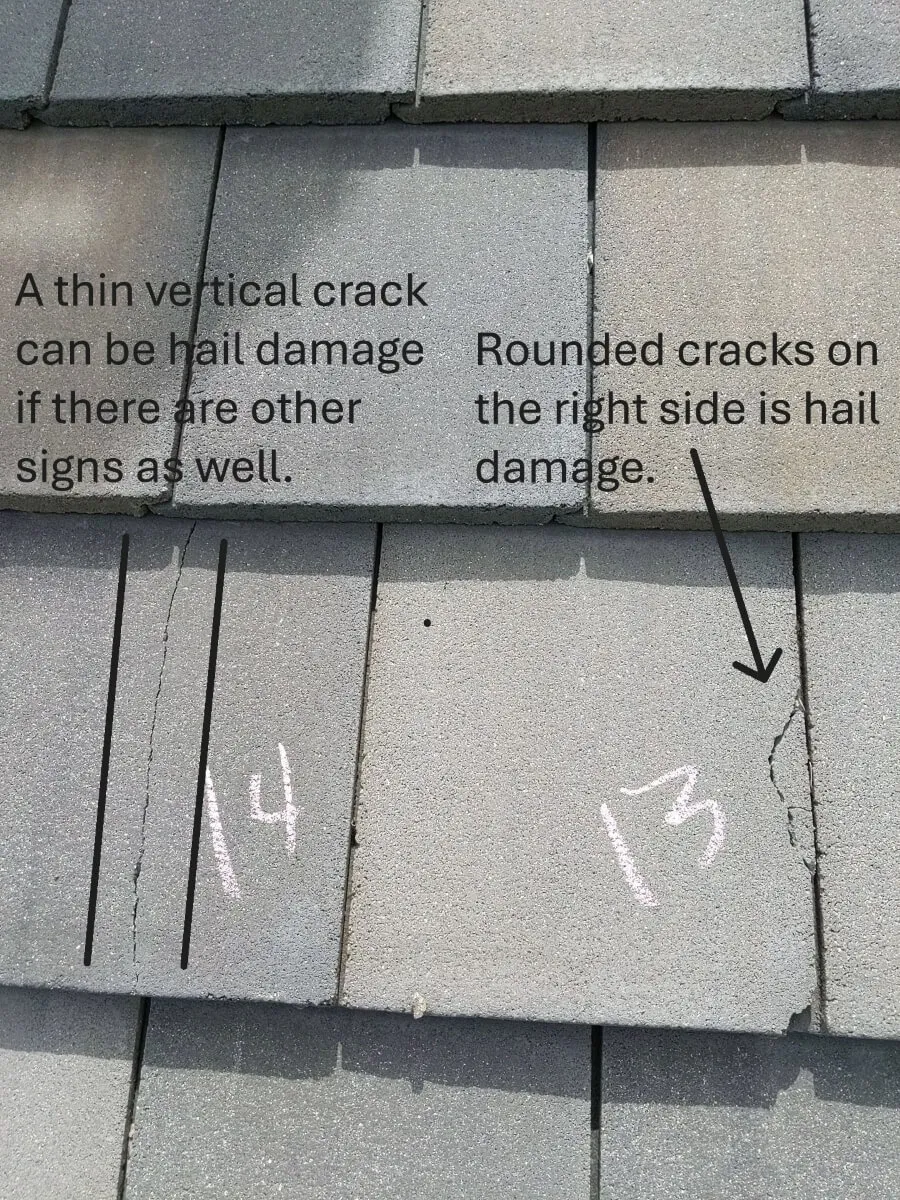
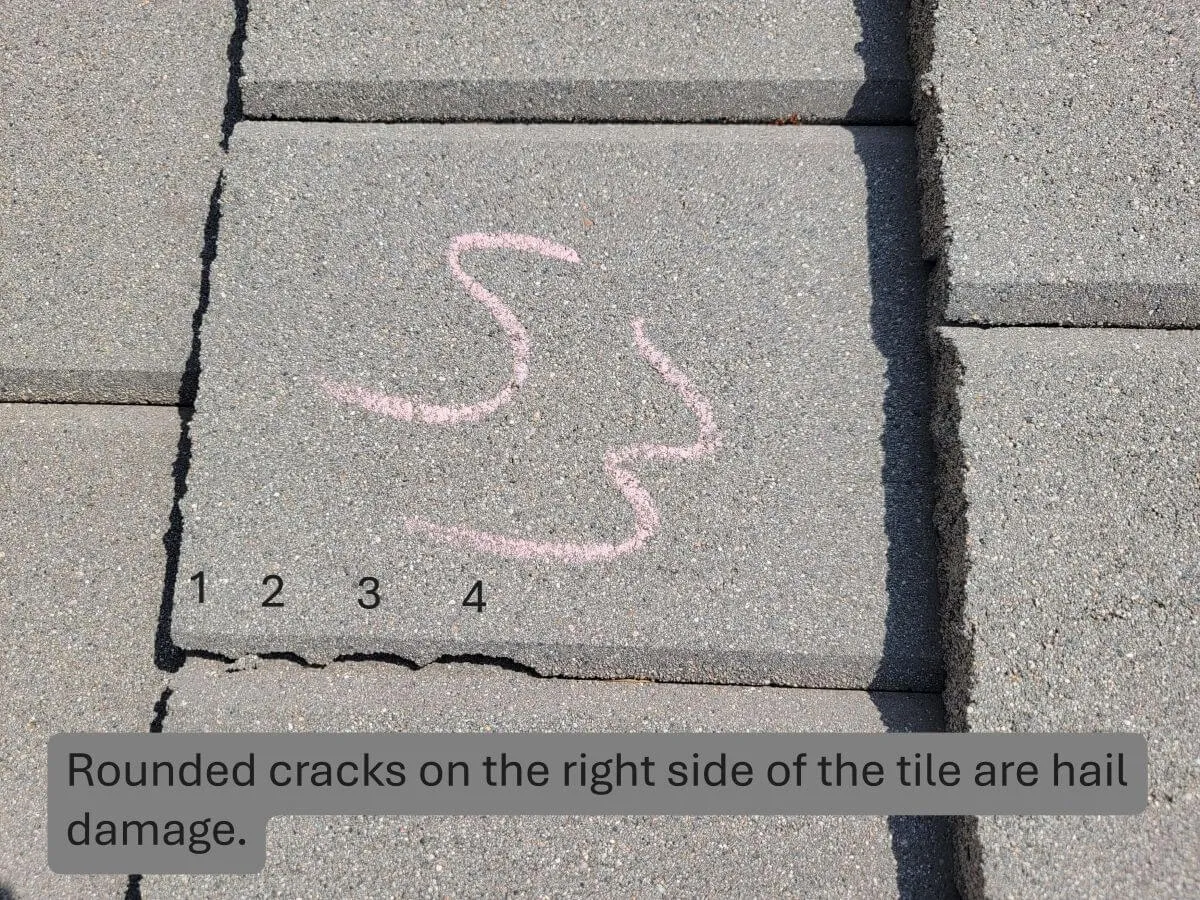
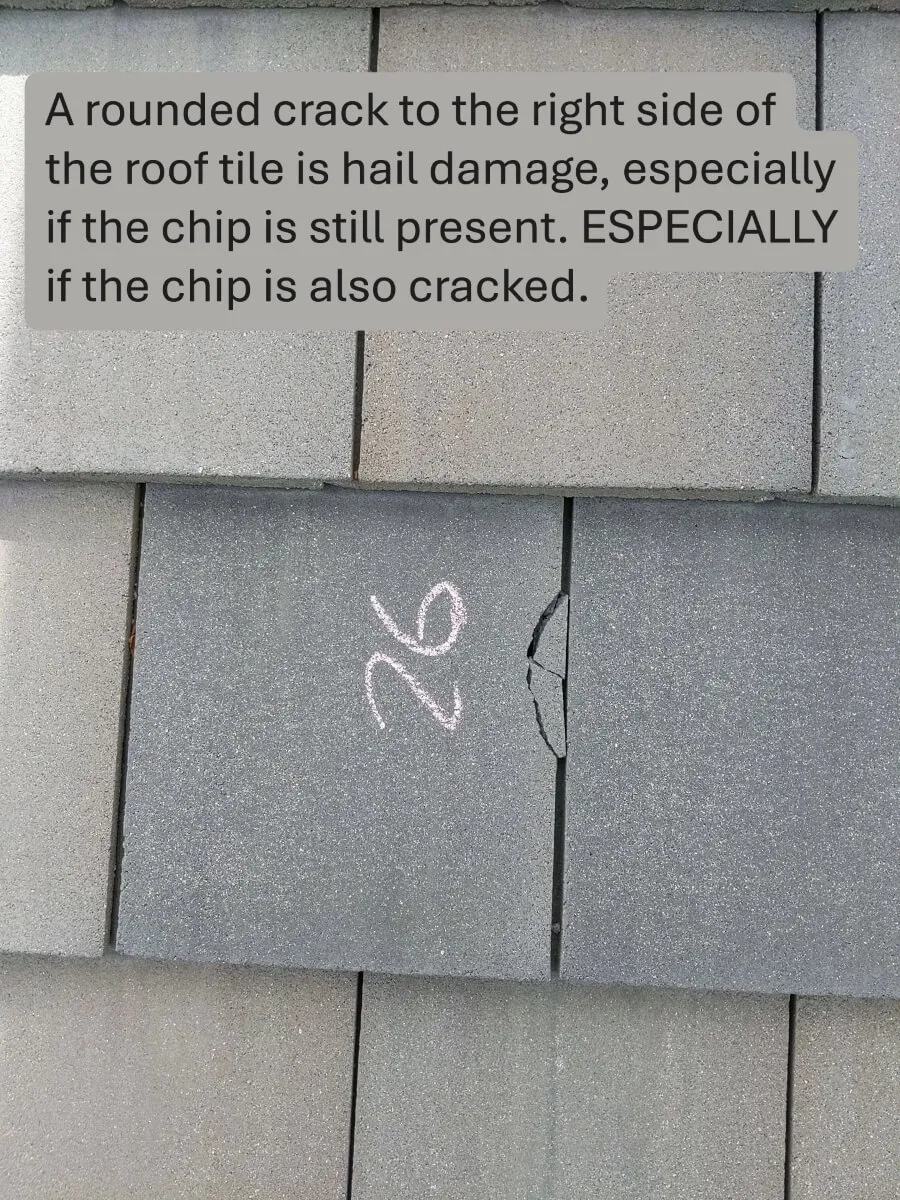
On concrete tiles, hail damage often manifests as rounded or arched cracks and chips, especially on the corners and edges. A perfect impact can leave a cracked chip that is still in place, as seen in the examples. This is undeniable proof of hail.
Click on any image to open a full-size version.
For examples of other non-hail related issues to tile roofs, such as installation errors or mechanical damage, see our full Post-Storm Recon (Inspections) gallery.


Threat Assessment: Wood Shake Roofs
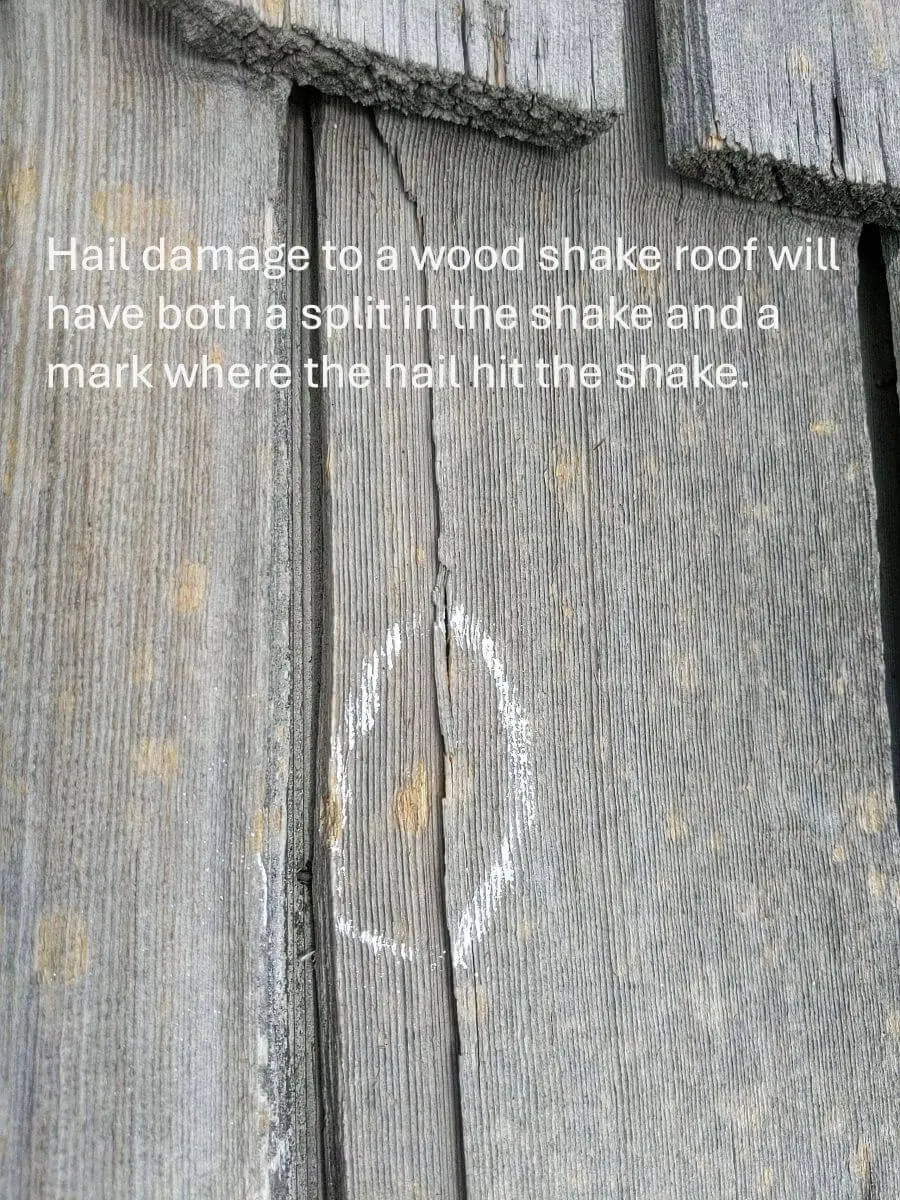
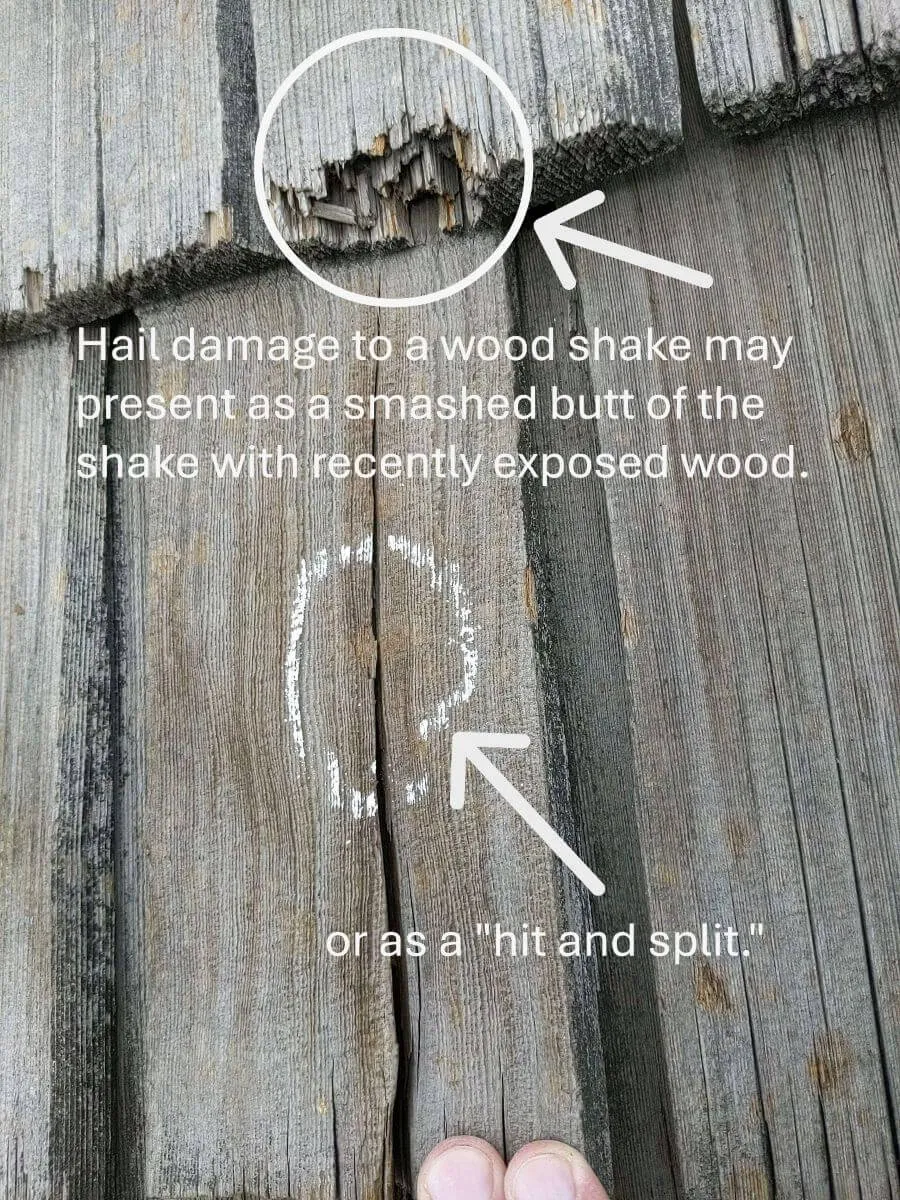
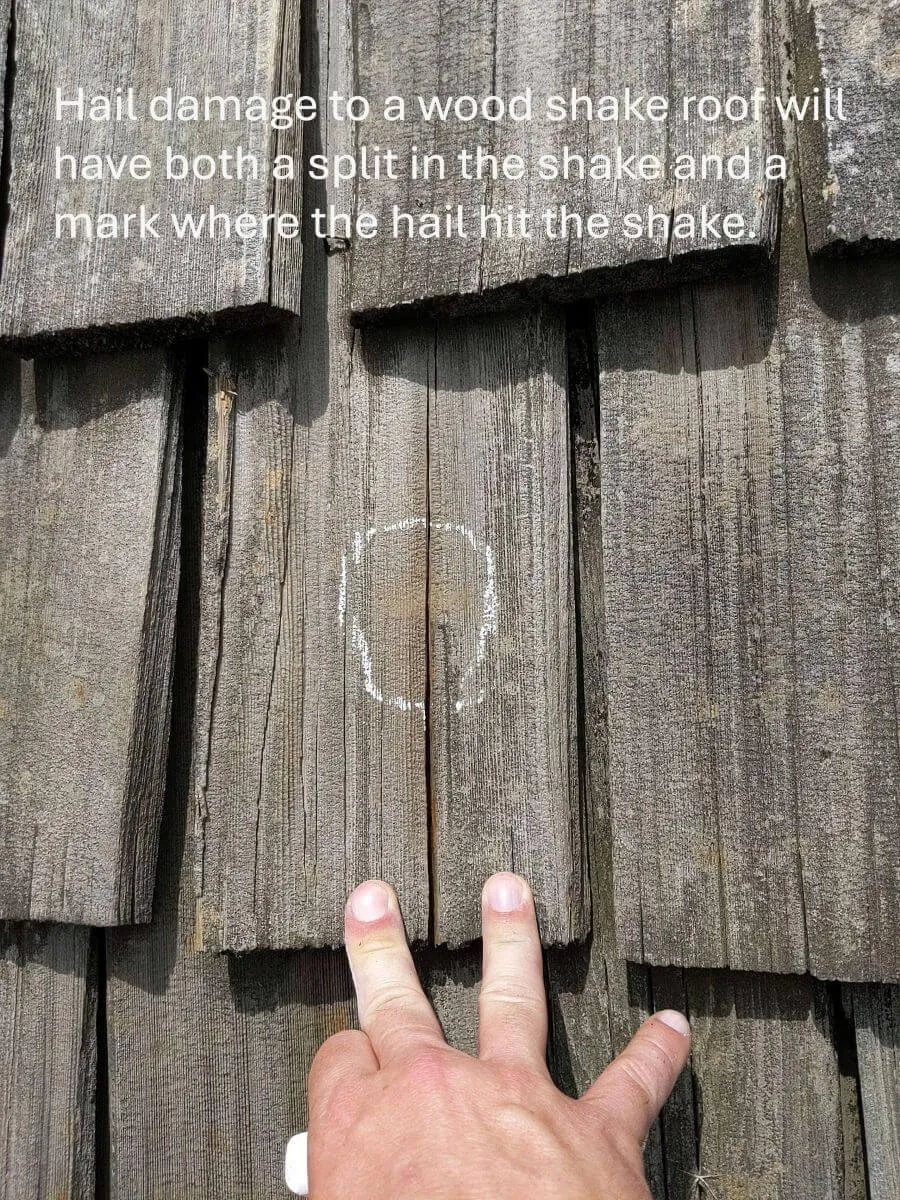
Hail damage to a wood shake roof will typically present in two distinct ways. The most common is a "hit and split," where you can see both a fresh split in the wood and a dark, bruised mark where the hail actually impacted the shake.
Another clear sign is a smashed "butt" of the shake, where the bottom edge is shattered, revealing recently exposed, lighter-colored wood.
Click on any image to open a full-size version.
Threat Assessment: Natural Slate Roofs
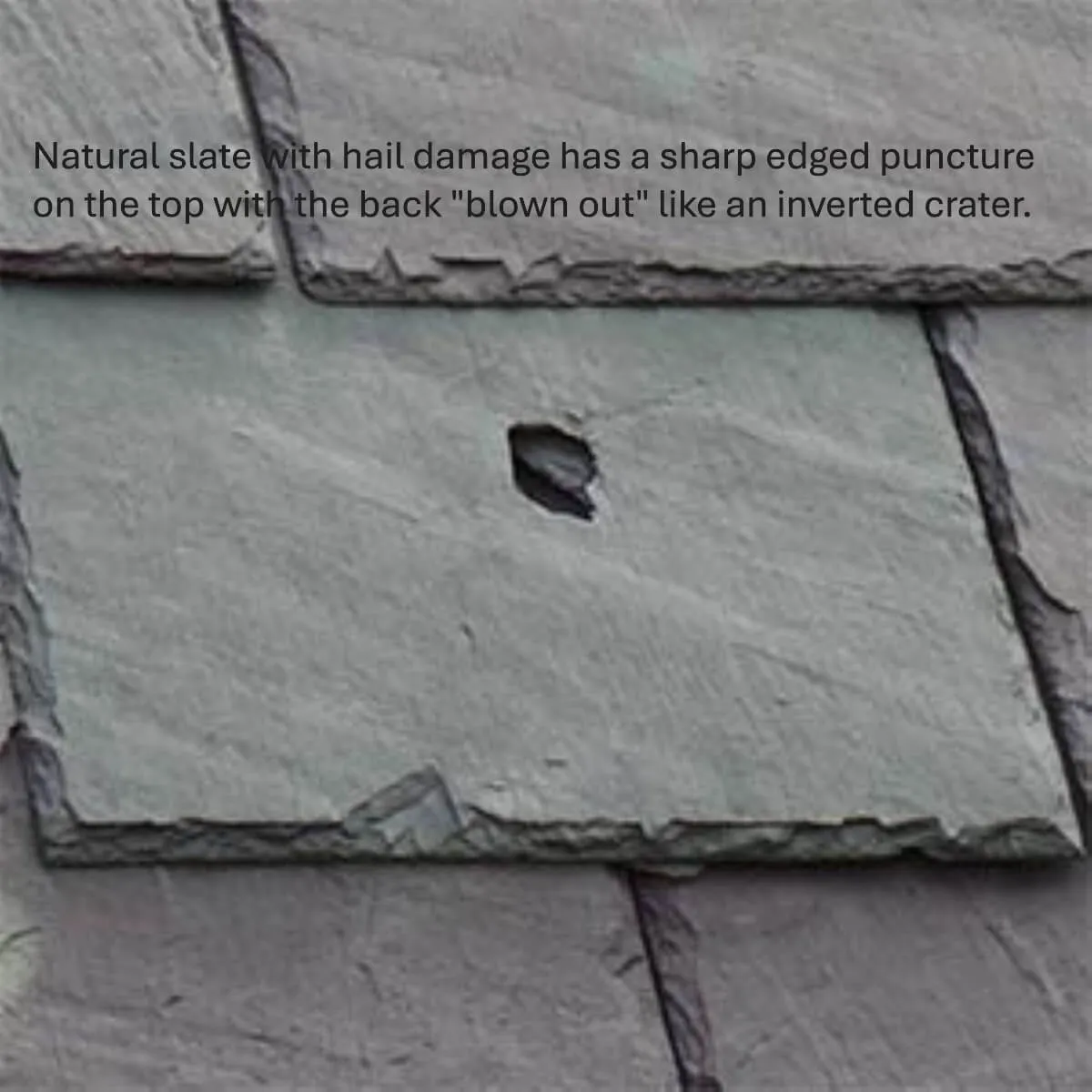
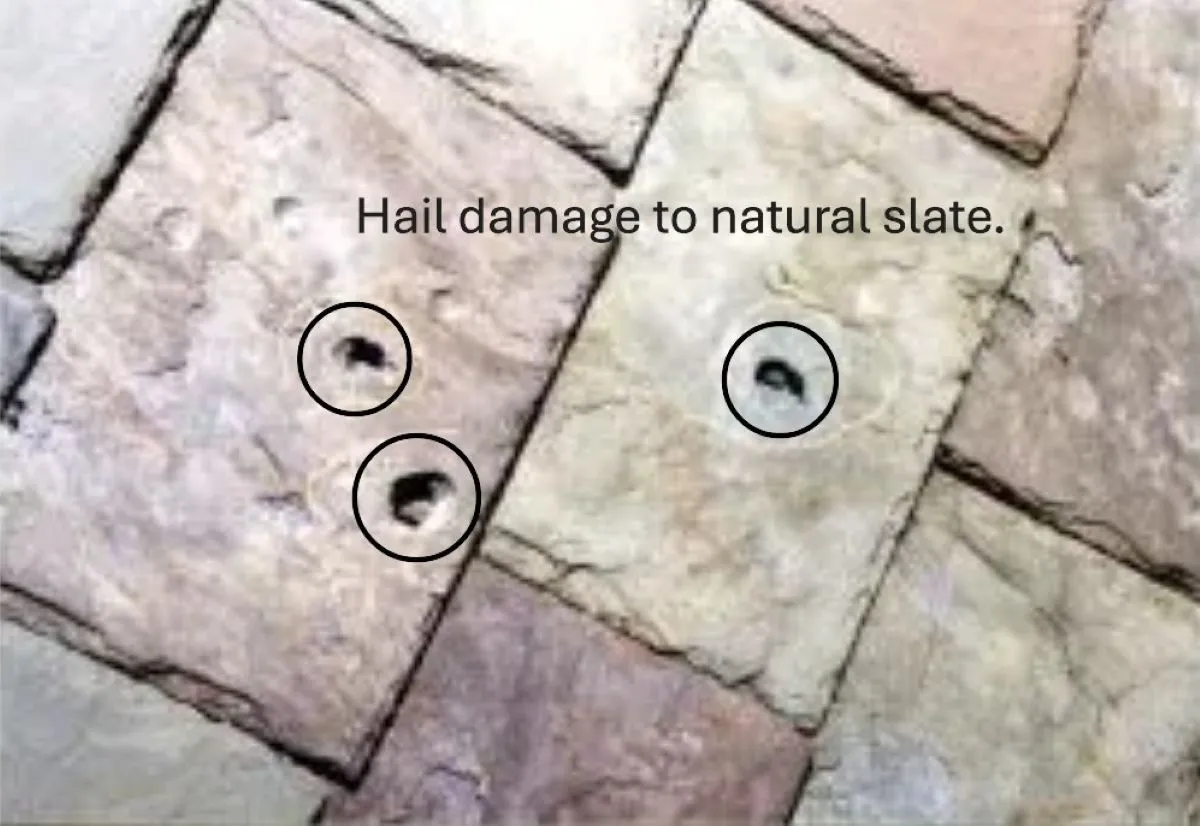
Hail damage to natural slate is often more dramatic than on other materials. A direct impact can cause a sharp-edged puncture through the top of the slate. This often results in the back of the slate being "blown out," creating a larger crater on the underside.
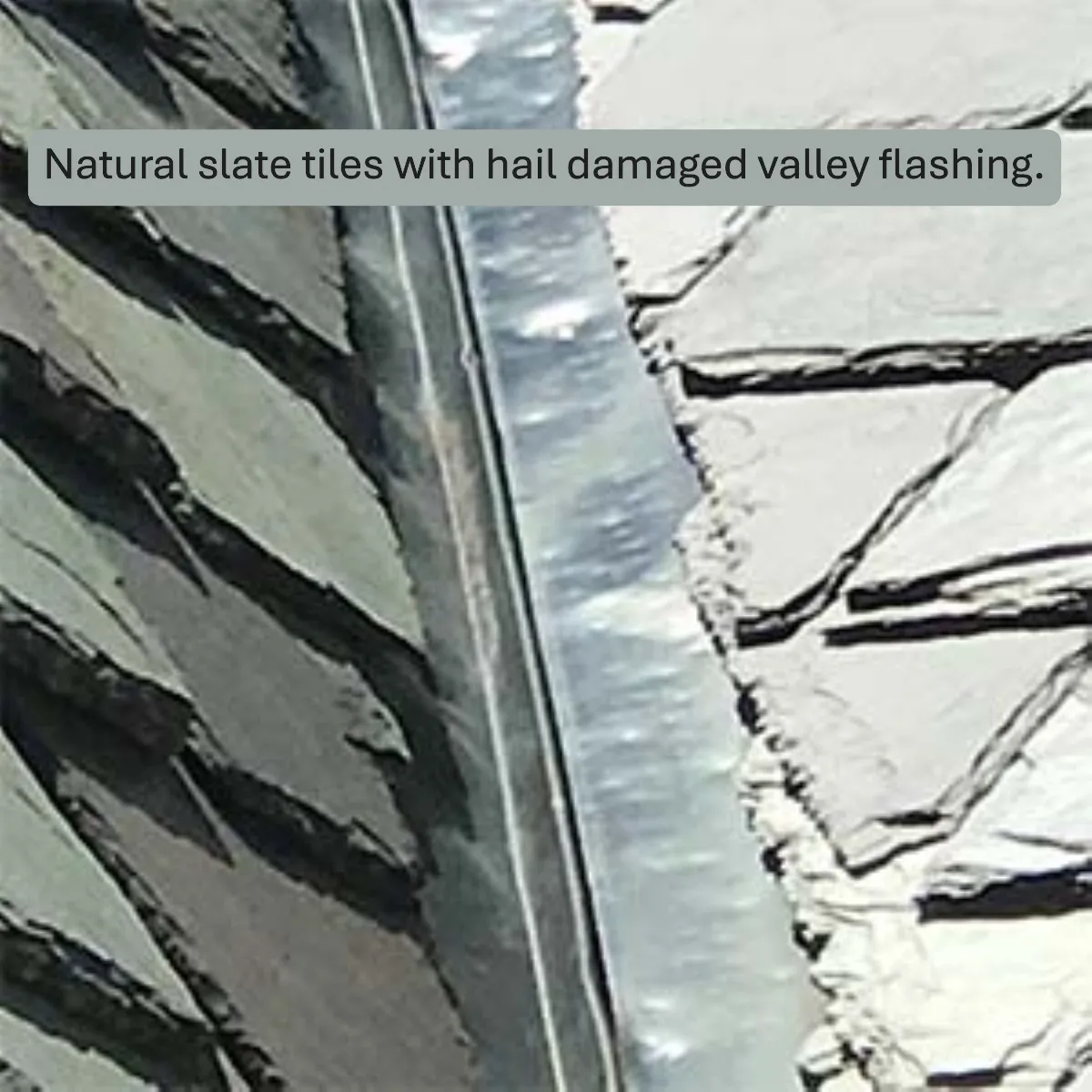
It's also critical to inspect the soft metal components, as the metal valley flashing can sustain significant denting from hail.
Click on any image to open a full-size version.
Threat Assessment: Flat Roofs
On commercial and residential low-slope roofs, identifying hail requires a different approach. On membrane systems like Modified Bitumen (Mod Bit), TPO, or PVC, you are looking for bruising, fractures, or punctures in the membrane.
Modified Bitumen (Mod Bit)
A classic sign of hail on Mod Bit is the "bullseye"—a pattern of concentric circles at the point of impact where the membrane has been bruised. This is often easiest to spot near transitions, like where the roof meets a parapet wall.
TPO / PVC
On single-ply membranes like TPO and PVC, hail can cause circular fractures or punctures that compromise the watertight layer. These can be subtle and often require a hands-on inspection to identify properly.
NEED A PROFESSIONAL ASSESSMENT?
This intel will help you spot a threat, but a professional operative can give you a complete tactical analysis. Contact us for a free, no-obligation inspection of your stronghold. It's a no-Brainer!
SCHEDULE FREE RECON